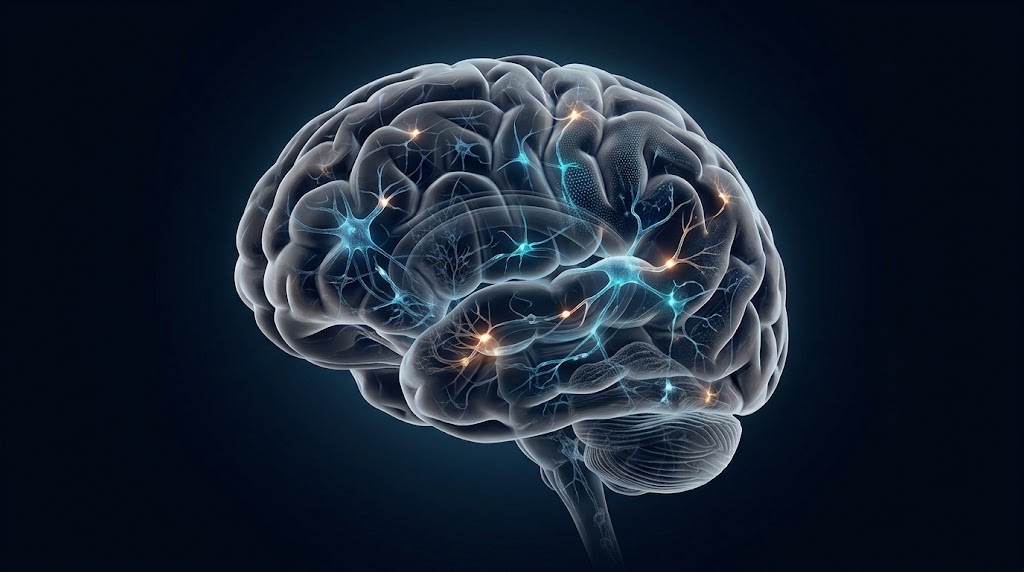
For many years, scientists used to think that once fully developed, the adult brain didn’t go through any further significant transformations. Once childhood passed, what the brain had was thought to remain the brain’s structure until the end of life.
Recent research in neuroscience has shown that this view was wrong. Thanks to these discoveries, we now know that the brain is capable of adapting throughout life via neuroplasticity. It retains the ability to create new synaptic pathways and lose connections that it no longer needs.
This process does not happen automatically. The brain uses as little energy as possible, which makes it rely on patterns and actions it is accustomed to. It adapts its structure through signals that indicate the need to make changes to existing neural connections.
6 Ways to Rewire Your Brain:
To make structural neuroplasticity happen, the brain employs neuromodulators in combination with physical exercise.
1. Focused Attention (Acetylcholine)
The role of focused attention in neuroplasticity is significant. Whenever the brain focuses on something difficult, the basal forebrain becomes activated, releasing acetylcholine, which marks specific neural pathways as important for the brain.
2. Embracing Mistakes (Norepinephrine and Dopamine)
Though making mistakes while gaining new knowledge may seem ineffective, things are not that simple. Whenever something does not match your expectations, a prediction error is produced in the brain.
This produces norepinephrine and dopamine responses. As a result, the brain receives signals about the changes that need to be made.
3. Sleep and Memory
Focus and mistakes allow you to know what you need to change, while sleep plays a major role in the process of consolidating what you have learned.
During slow-wave sleep, the brain replays the day’s experiences.
4. Novelty in the Environment
Novel experiences may also cause neuroplasticity.
When you leave your usual routine, the locus coeruleus is activated, making the process of changing neural mechanisms easier.
New surroundings may require the brain to create new models.
5. Aerobic Exercise and BDNF
Exercise has a positive effect not only on the body but also on the brain.
Cardio exercise increases levels of BDNF, a special substance that supports neural processes.
6. Repetition and Myelination
Training is a crucial part of any learning process.
Repeating words and actions gives the brain a chance to become more skilled at new tasks. Oligodendrocytes are the cells responsible for the myelination of axons.
The Bottom Line
Skills and knowledge cannot be regarded as stable characteristics. They are acquired through practice, experiencing mistakes, and resting.
References & Further Reading
References
Fuchs, E. & Flügge, G. (2014). Adult Neuroplasticity: More Than 40 Years of Research. Neural Plasticity, 2014, 541870. https://pmc.ncbi.nlm.nih.gov/articles/PMC4026979/
Diekelmann, S. & Born, J. (2010). The Memory Function of Sleep. Nature Reviews Neuroscience, 11, 114–126. https://www.nature.com/articles/nrn2762
Cotman, C. W. & Berchtold, N. C. (2002). Exercise: A Behavioural Intervention to Enhance Brain Health and Plasticity. Trends in Neurosciences, 25(6), 295–301. https://pubmed.ncbi.nlm.nih.gov/12086747/
Lövdén, M. et al. (2013). Structural Brain Plasticity in Adult Learning and Development. Neuroscience & Biobehavioral Reviews, 37(9), 2296–2310. https://pubmed.ncbi.nlm.nih.gov/23458777/